


 (
(










 Login
Login Cart
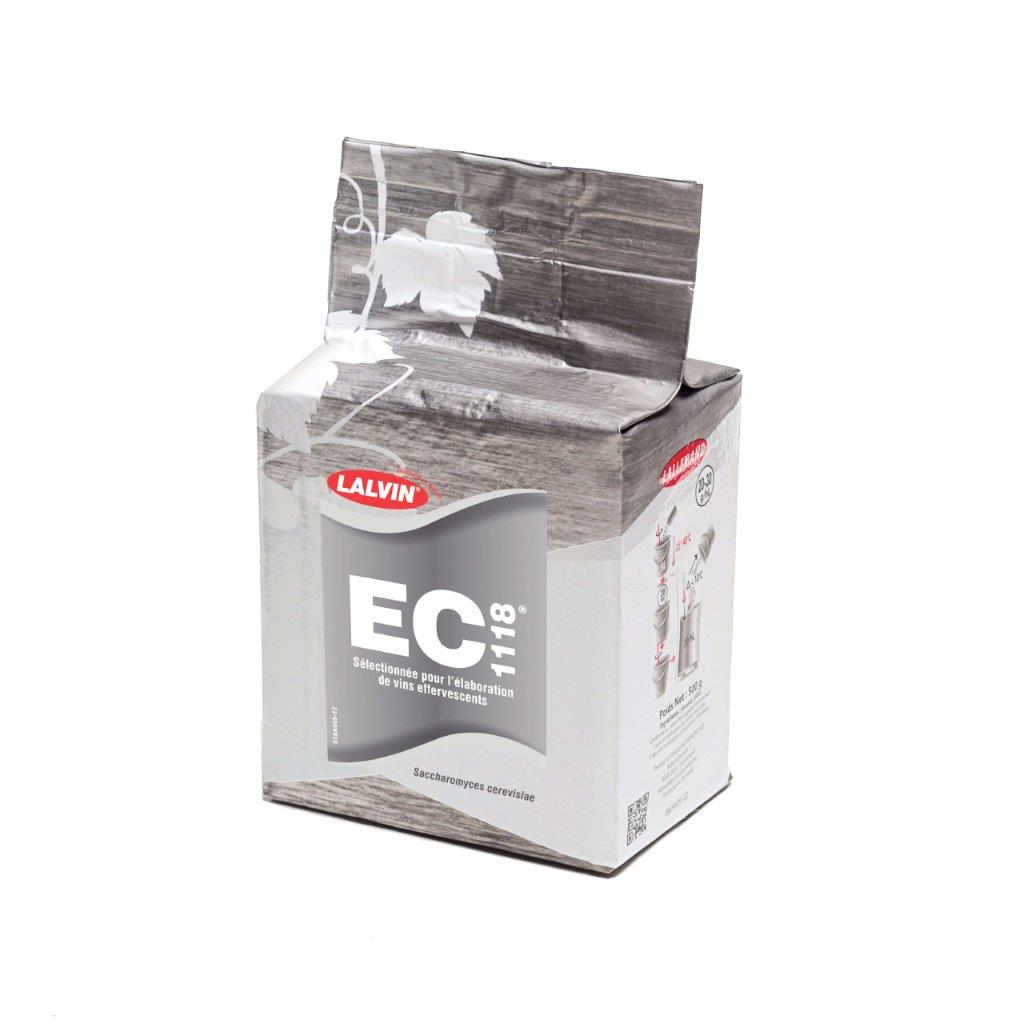
CartLALVIN EC-1118 0,5 kg
item(s) added to your cart
Cart total
ORIGIN AND APPLICATION
Robust, Reliable and Neutral. Useful for a wide range of applications, including
wine and fruit cider fermentations.
A yeast selected in the famous sparkling wine region for its excellent properties in producing sparkling base wine as well as “in-bottle” secondary fermentation.
Lalvin EC 1118® is known for its robust and reliable fermentation kinetics. Its sensory contribution is considered neutral, as it gives very little yeast sensory contribution to the wine.
It is used extensively in the world for the production both white and red wines.
MICROBIAL AND OENOLOGICAL PROPERTIES
• Recommended for white, rose and red wine production.
Highly recommended for secondary fermentation.
• Saccharomyces cerevisiae var. bayanus
• Desirable fermentation temperature: 10-30°C. (50-86°F)
• Alcohol tolerance 18% v/v *subject to fermentation conditions.
• Low relative nitrogen demand (under controlled laboratory conditions)
• Short lag phase and high fermentation vigour. Cooling may be required to control this high vigour.
• Very low production of H2S under low YAN conditions
• Low production of SO2 binding compounds.
• Moderate relative potential for SO2 production (can produce high levels of SO2 under low nutrient conditions, up to 50mg/L).
• Competitive factor active.
• Low foam producer.
INSTRUCTION FOR USE
Dosage Rate:
• 25g/hL (2lb/1000gal) of Active Dried Yeast (this will provide an initial cell population of approximately 5 x10⁶ viable cells/mL)
• 30g/hL (2.4lb/1000gal) of Go-Ferm Protect Evolution™
• Nitrogen source from the Fermaid™ range
Procedure for 1000L (264gal) ferment.
1) Add 300g (10.6oz) of Go-Ferm Protect Evolution™ to 6L (1.5gal) of 40-43°C (104-110°F) clean, chlorine free water. Stir until an homogenous suspension free of lumps is achieved.
2) When the temperature of this suspension is between 35-40°C (95-104°F), sprinkle 250g (8.8oz) of yeast slowly and evenly onto the surface of the water, whilst gently stirring. Ensure any clumps are dispersed.
3) Allow to stand for 20 minutes before further gently mixing.
4) Mix the rehydrated yeast with a little juice, gradually adjusting the yeast suspension temperature to within 5-10°C (9-18°F) of the juice/must temperature.
5) Inoculate into the must.
Further Notes
• Steps 1-5 should be completed within 30 minutes.
• It is best to limit first juice/must volume addition to one tenth the yeast suspension volume and wait 10 minutes before the addition to juice.
• To minimize cold shock, ensure temperature changes are less than 10°C (18°F).
• It is recommended that juice / must be inoculated no lower than 18°C (64°F).
• It is recommended to use complex nutrition source such as Fermaid®.